

The Stiffness You Can’t Ignore
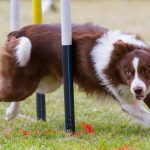
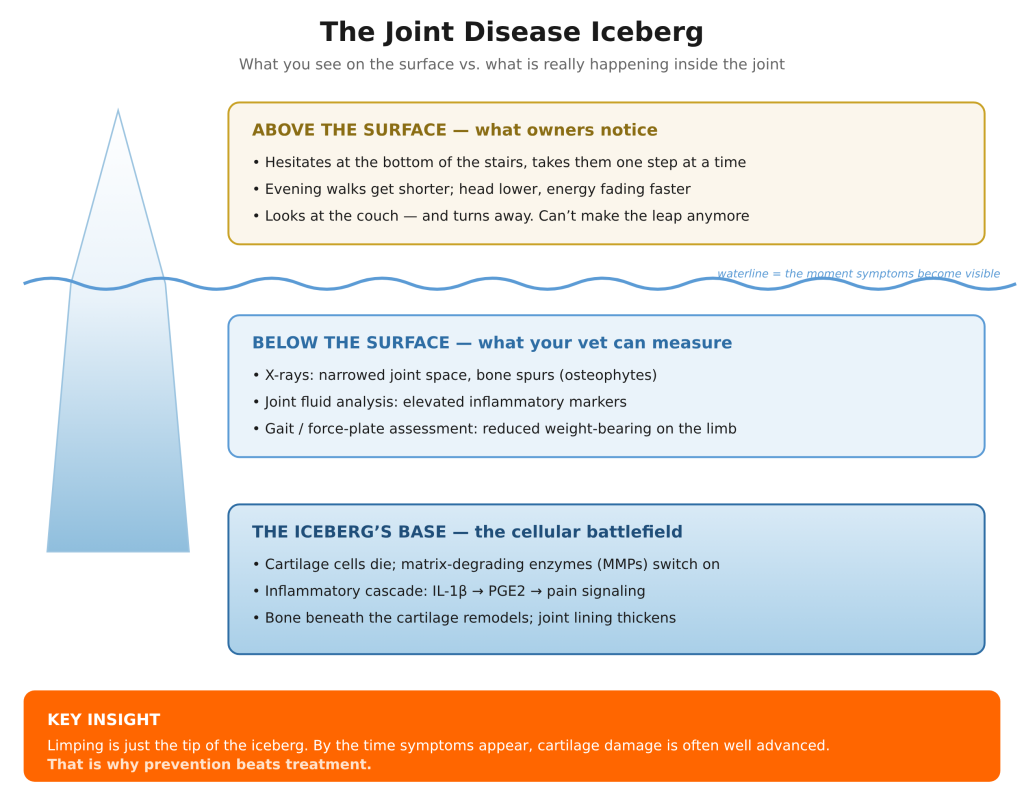
It happens slowly, almost unnoticed. First, it’s your dog hesitating at the bottom of the stairs, taking them one step at a time with a visible wince. Then, you notice their steps during the evening walk are shorter, their head lower, their energy fading faster than usual. Finally, the moment that breaks your heart: they look at the couch—the one they’ve jumped onto for years—and simply turn away. They can’t make the leap anymore.
This shift is common. As dogs age or gain weight, their joints naturally undergo wear and tear. But while some stiffness is a normal part of aging, it doesn’t mean your dog has to live in discomfort.
We used to say hip arthritis was always due to aging and genetics, but we have learned that is not the case. … ‘If you have hip dysplasia, you are headed toward arthritis, but there are things we can do now to save your hip.’ The same is true for dogs.
— Dr. James L. Cook, DVM, PhD, DACVS, Director, Thompson Laboratory for Regenerative Orthopaedics, University of Missouri, in “Precision Medicine Research Could Help People and Their Pets Avoid Hip Problems,” MU School of Medicine News, March 2020
When we prioritize their comfort early, we don’t just extend their life; we improve the quality of the time we have left. A dog that moves freely is a dog that stays part of the family, not a patient we’re managing.
Why Do Joints Degrade? The Science Behind the Pain
Before we talk about solutions, we need to understand the problem. Joint issues aren’t just “old age.” They are often the result of specific, manageable factors.
1. The Weight Factor
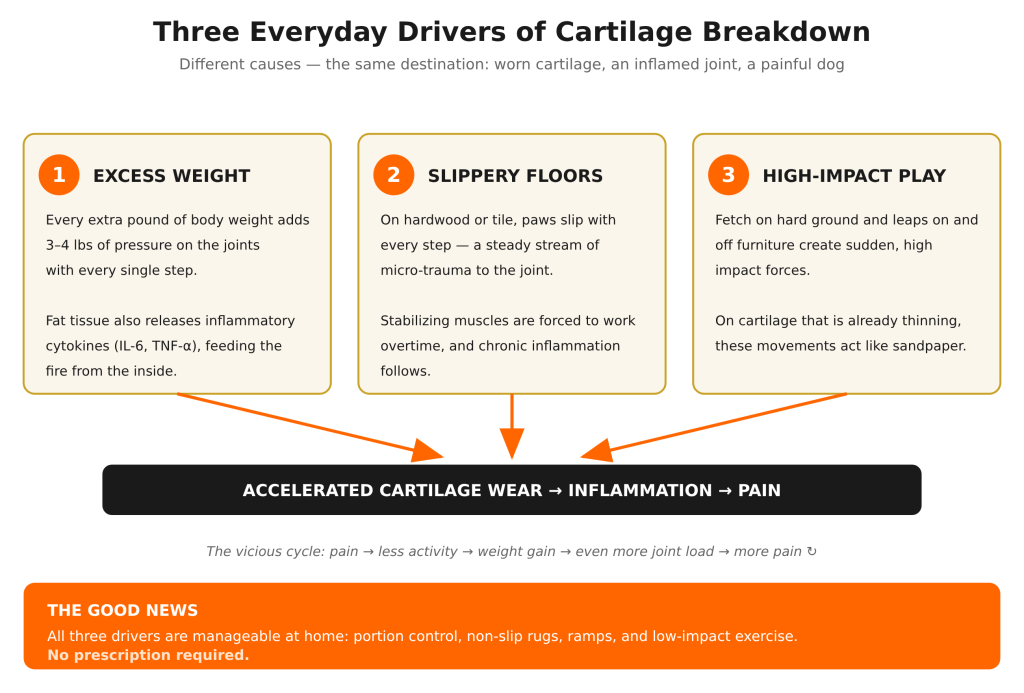
Every extra pound of body weight places 3 to 4 pounds of extra pressure on your dog’s joints. A 10% increase in body weight can lead to a 30% increase in joint stress. For a large breed like a Golden Retriever, this is a massive mechanical load that accelerates cartilage breakdown.
According to Marshall et al. (2009, Journal of Nutrition), adipose tissue secretes pro-inflammatory cytokines including IL-6 and TNF-α, creating a vicious cycle where obesity not only increases mechanical load but also promotes systemic inflammation that further degrades joint cartilage.
2. The “Slippery Floor” Effect
Modern homes are often filled with hardwood, tile, or laminate. When a dog’s paws slip on these surfaces, their joints experience micro-trauma with every step. This constant instability forces muscles to work overtime to stabilize the joint, leading to inflammation and pain.
A study published in Veterinary and Comparative Orthopaedics and Traumatology (2013) found that dogs living primarily on slippery surfaces showed significantly higher rates of osteoarthritis progression compared to those with stable footing.
3. High-Impact Movement
Activities like chasing a ball, jumping on/off furniture, or playing fetch on hard surfaces create sudden, high-impact forces. For a dog with early-stage cartilage thinning, these movements act like sandpaper, grinding away the protective layer.
“It may sound simple, but the fact is that over 50% of the dogs we see are overweight. And that puts undue stress on their joints and soft tissue. Keeping your dog at an appropriate weight is central to their longevity, and that includes proper nutritional strategies encompassing their diet and supplementation.”
— Dr. Felix Duerr, DVM, DACVS-SA, DACVSMR, Associate Professor of Small Animal Orthopedics, Colorado State University, interview: “Canine Mobility: Factors Affecting a Dog’s Ability to Move,” Platinum Performance, 2025
How to Protect Your Dog’s Joints: A Science-Backed Strategy
Protecting joints requires a multi-layered approach. It’s not just about what you feed; it’s about how you live.
1. The Right Ingredients: What Actually Works?
Not all supplements are created equal. Many are under-dosed or contain single ingredients that don’t work synergistically.
Omega-3 Fatty Acids (EPA/DHA): The gold standard for reducing inflammation. They calm the joint from the inside out by competitively inhibiting arachidonic acid metabolism, reducing pro-inflammatory prostaglandins.
ASU (Avocado/Soy Unsaponifiables): Proven to slow the breakdown of cartilage and stimulate collagen production. A meta-analysis by Maheu et al. (2019, Osteoarthritis and Cartilage) confirmed ASU’s disease-modifying potential in osteoarthritis management.
Eggshell Membrane (ESM): A natural source of collagen, glucosamine, chondroitin, and hyaluronic acid. Studies show it can improve comfort in as little as 7 days by providing a complete matrix of joint-supporting compounds.
Glucosamine & Chondroitin: The building blocks for cartilage repair. They need to be combined with anti-inflammatories to be effective. Oral bioavailability of glucosamine is approximately 20-30%, meaning dose and consistency matter significantly.
“A moderate level of comfort exists that the claimed relationship is scientifically valid. The lack of response and the limited number of controlled trials make it difficult to formulate any recommendations at this time.”
— Aragon CL, Hofmeister EH, Budsberg SC. “Systematic review of clinical trials of treatments for osteoarthritis in dogs.” Journal of the American Veterinary Medical Association, 2007;230(4):514–521 (Senior author: Dr. Steven C. Budsberg, DVM, MS, DACVS, Professor of Orthopedic Surgery, University of Georgia)
2. Lifestyle Changes: The Invisible Foundation
Supplements are the support, but lifestyle is the foundation.
Add Non-Slip Rugs: Cover slippery floors in high-traffic areas to reduce micro-trauma.
Use Ramps: For cars, sofas, and beds to eliminate jumping and the impact forces that accelerate cartilage wear.
Low-Impact Exercise: Swap high-impact fetch for swimming or controlled leash walks. Swimming reduces joint load by approximately 90% while maintaining muscle strength.
Weight Management: Keeping your dog at an ideal body condition score (BCS 4-5/9) is the single most effective intervention you can make. Every pound lost is four pounds of pressure removed from the joints.
3. What a Complete Joint Care Approach Looks Like
The most effective joint care doesn’t rely on a single ingredient. Research shows that addressing multiple pathways simultaneously produces better outcomes than any single approach alone. A comprehensive strategy should target four key areas:
| Pillar | What It Does | Key Ingredients to Look For |
| Structure | Provide raw materials for cartilage repair | Glucosamine, Chondroitin, MSM |
| Protection | Slow existing cartilage degradation | ASU (Avocado/Soy Unsaponifiables) |
| Inflammation Control | Reduce joint inflammation and pain signaling | Omega-3s (EPA/DHA), Curcumin, Boswellia |
| Fast Comfort | Rapid relief while structural support builds | Eggshell Membrane (ESM) |
When evaluating joint supplements for your dog, look for formulations that address all four pillars rather than relying on a single ingredient. Products that combine glucosamine and chondroitin with anti-inflammatory support (Omega-3s, curcumin) and cartilage protection (ASU) offer the most comprehensive approach. Third-party testing (NSF, USP) and transparent labeling—showing exact milligram amounts rather than “proprietary blends”—are hallmarks of quality formulations.
Human-grade ingredient sourcing, while not a regulatory requirement in pet supplements, often indicates higher purity standards. Similarly, formulations designed to work alongside veterinary treatments (including NSAIDs and prescription joint therapies) without negative interactions demonstrate a commitment to integrative care.
Dosing: Precision Matters
One of the most common reasons supplements fail is incorrect dosing. A dose that works for a Chihuahua will do nothing for a Great Dane.
| Dog Size | Weight Range | Daily Dosage Recommendation |
| Small | Under 20 lbs | 1 chew (or 500mg equivalent) |
| Medium | 20 – 50 lbs | 2 chews (or 1000mg equivalent) |
| Large | 50 – 90 lbs | 3 chews (or 1500mg equivalent) |
| Giant | Over 90 lbs | 4 chews (or 2000mg equivalent) |
Consistency is Key: Joint health is a marathon, not a sprint. Most owners see initial comfort improvements within 7–14 days due to the fast-acting ESM and Omega-3s, but structural benefits take 4–8 weeks of consistent daily use.
Safety First: What You Need to Know
Even natural supplements carry risks. Transparency is not just ethical—it’s essential for your dog’s safety.
Mild Adaptation: Some dogs may experience mild soft stools in the first few days as their system adjusts. This usually resolves on its own within 3-7 days.
Allergies: Natural ingredients like eggshell membrane and fish oil can trigger reactions in sensitive dogs. If your dog has known allergies, review the complete ingredient list with your vet before starting.
Medication Interactions: While most joint supplements are generally safe, always inform your vet if your dog is on blood thinners or NSAIDs, as Omega-3s can have mild blood-thinning effects at high doses.
“Functional changes in drug transporters, whether mediated by genetic variability or drug-drug interactions, affect drug disposition and, ultimately, drug safety and efficacy in veterinary patients.”
— Mealey KL. “Adverse drug reactions in veterinary patients associated with drug transporters.” Veterinary Clinics of North America: Small Animal Practice, 2013;43(5):1067–1078 (Dr. Katrina Mealey, DVM, PhD, DACVIM, DACVCP, Regents Professor, Washington State University)
Frequently Asked Questions
Q: How long before I see results?
A: Most owners notice improved comfort and mobility within 7–14 days due to the fast-acting ESM and Omega-3s. Structural repair and long-term benefits typically show after 4–8 weeks of consistent use. For weight management effects, improvements in joint stress can be measured within 2–4 weeks of achieving target body condition.
Q: Can I give human joint supplements to my dog?
A: It’s not recommended. Human formulas often contain xylitol (toxic to dogs), inappropriate dosing ratios, or lack the specific synergistic balance dogs need. Stick to pet-specific, vet-tested formulas.
Q: My dog is young. Is it too early to start?
A: For large breeds or dogs with a family history of joint issues, starting at 2–3 years is proactive. According to Innes (2013, Veterinary and Comparative Orthopaedics and Traumatology), early intervention can delay osteoarthritis onset by 2–3 years in high-risk breeds.
Q: Are joint supplements just a waste of money?
A: Some are. Many products are under-dosed or contain fillers. But ingredients like Omega-3s, ASU, and ESM have strong clinical evidence. The key is choosing a brand with full transparency, third-party testing, and scientific backing.
The Bottom Line: A Partnership for Better Days
Joint care isn’t about a single product. It’s about weight management, safe movement, and science-backed nutrition working together.
The evidence is clear: dogs that maintain lean body condition, live in environments with stable footing, engage in low-impact exercise, and receive consistent, appropriately-dosed joint supplementation have significantly better mobility outcomes and longer pain-free lifespans than those who don’t.
“The partnership of pet owner and veterinary health care team can accept the challenge of anticipating, preventing, finding, and relieving pain…”
— Downing R. “Pain management for veterinary palliative care and hospice patients.” Veterinary Clinics of North America: Small Animal Practice, 2011;41(3):519–550 (Dr. Robin Downing, DVM, MS (Bioethics), DACVSMR, DAAPM, Founder & Past President, International Veterinary Academy of Pain Management)
Because protecting your dog’s joints was never about finding a miracle pill. It’s about partnership — yours with your vet — so your dog can run, play, and rest without pain.
Disclaimer
This guide is compiled from peer-reviewed veterinary research and clinical practice guidelines, with all expert citations linked to their original sources. The content is purely educational and is not a substitute for personalized professional veterinary care. Always consult your vet before introducing any supplements to your dog’s routine—this is especially critical if your pet has preexisting health issues or takes prescription medication.
Much like how every dog has wildly different feelings about bath time, opinions on canine supplements vary widely among veterinarians and pet care experts. Every pup has one-of-a-kind physical needs, so nothing in this article should be treated as definitive medical fact. Discuss all wellness decisions with your trusted vet and use your own good judgment for your dog’s unique situation.
References
Budsberg, S.C., & Torres, B.T. (2017). Joint biomechanics and pathophysiology. Veterinary Surgery: Small Animal (2nd ed.), Elsevier.
Innes, J.F. (2013). Osteoarthritis. Veterinary and Comparative Orthopaedics and Traumatology, 26(3), 165-172.
Johnston, S.A. (2008). Osteoarthritis: Joint anatomy, physiology, and pathobiology. Veterinary Clinics: Small Animal Practice, 38(5), 933-950.
Kealy, R.D., et al. (2002). Effects of diet restriction on life span and age-related changes in dogs. JAVMA, 220(9), 1315-1320.
Maheu, E., et al. (2019). Symptomatic efficacy of avocado-soybean unsaponifiables in osteoarthritis. Osteoarthritis and Cartilage, 27(S1), S32-S33.
Marshall, W.G., et al. (2009). The effect of weight loss on lameness in obese dogs with osteoarthritis. Journal of Nutrition, 139(8), 1548S-1550S.
McCarthy, G., et al. (2007). Randomised double-blind, positive-controlled trial to assess the efficacy of glucosamine/chondroitin sulfate. Veterinary Therapeutics, 8(3), 225-235.
Neil, K.M., et al. (2005). Efficacy of an oral nutraceutical for the treatment of canine osteoarthritis. JAVMA, 227(5), 766-771.
Roush, J.K., et al. (2010). Multicenter veterinary practice assessment of the efficacy of omega-3 fatty acids. JAVMA, 236(1), 59-63.
Ruff, K.J., et al. (2009). Eggshell membrane in the treatment of pain and stiffness from osteoarthritis. Clinical Interventions in Aging, 4, 235-240.